
By Chloe Keith, Managing Director at Toolbox Marketing
A decade ago, most retail destinations still believed a good campaign and a well-lit car park were enough to bring people through the door. That world is gone. Physical retail isn’t competing with the shopping centre down the road anymore -it’s competing with a sofa, a phone, and free next-day delivery.
So what actually gets people to leave the house in 2030? Not louder promotions. Not more screens for the sake of it. The destinations that win will be the ones that stop chasing footfall and start building somewhere worth spending time -not just money.
Here is how the landscape shifts over the next few years, and what destination leaders should be doing about it now.
The Customer’s AI Assistant Becomes the New Front Door
Fewer people will start their day with a search bar or a scroll through Instagram. More of them will simply ask an AI assistant to sort it out -book the table, find the parking, work out what’s on.
That assistant already knows their schedule, their style, what they can’t eat, and roughly what they’re willing to spend. By the time someone actually arrives at a centre, the assistant has done the planning for them: table booked, route mapped, offers filtered to what’s actually relevant.
What this means for marketers: Destinations are no longer just marketing to people; they are marketing to the software people delegate decisions to. That means getting serious about the unglamorous stuff -making sure tenant stock, dining availability, events, and accessibility information are structured and accurate enough for an AI to actually read and trust. Bad data won’t just rank poorly; it will get skipped entirely.
Voice Stops Being a Novelty and Starts Being Background Noise
Smart speakers were the clumsy first draft. What’s coming is quieter -smart glasses, subtle earpieces, and voice interaction that doesn’t require anyone to look like they’re talking to themselves. Someone walking through a centre will just say, “Where can I get a gift like this?” or “Book two seats for the 7 pm film,” and expect it to happen.
For destinations, that means voice-friendly SEO becomes as important as the website ever was. If events, offers, and store information aren’t structured in a way voice systems can parse, the destination simply won’t come up in the conversation.
Augmented Reality Turns the Building Itself Into the Campaign
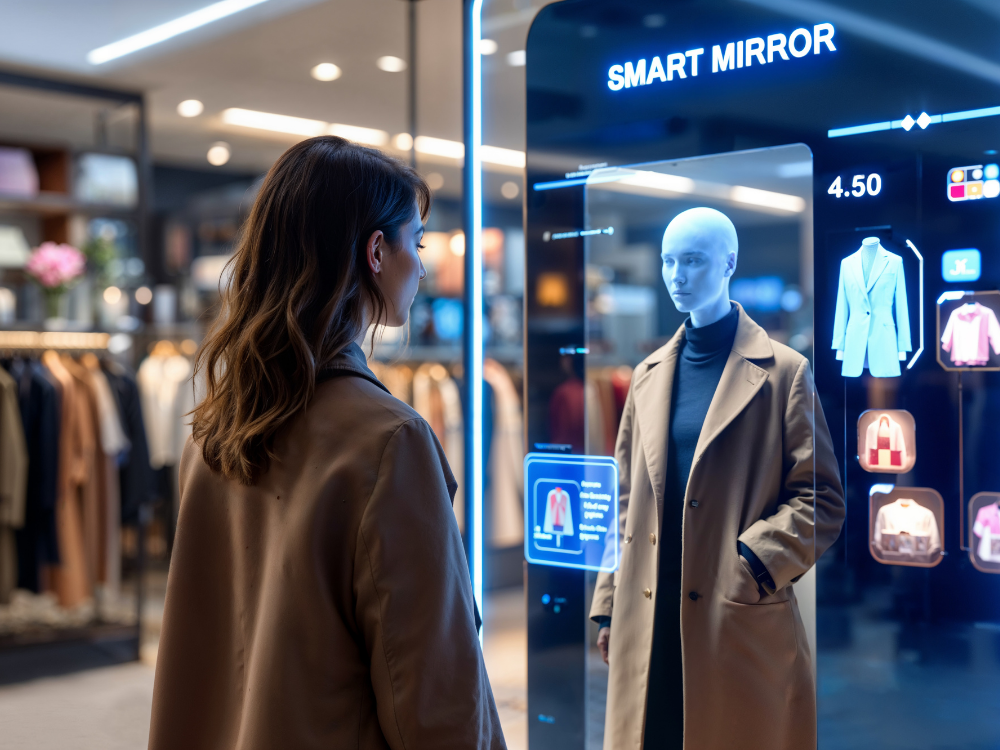
The line between physical and digital space is going to blur properly. Picture a storefront where the display changes depending on who’s looking at it. A heritage wall that tells the story of the site through an AR overlay. A treasure hunt woven through the centre that gets a family to stay an extra hour without them even noticing the nudge.
This changes what a “campaign” even is. Instead of a poster and a hashtag, marketers will be designing layered experiences, part event, part installation, part game, where the architecture is doing as much work as the advertising.
Personalisation That Doesn’t Feel Like Being Watched
Loyalty cards and blanket app discounts already feel dated. What replaces them is quieter and, done well, far more useful: digital signage that shifts based on who’s actually in the space, a free coffee offered at a quiet moment, or an invite to a pop-up because a visitor’s past choices suggest they’d genuinely like it.
Done badly, this tips straight into “how does it know that” territory. The real work here isn’t the technology -it’s earning the trust to use it. Destinations that are transparent about what data they hold and why will pull ahead of those that just deploy the tech and hope no one asks. Technology isn’t the point. People are.
It would be easy to read all of this and think the future of retail is about who has the flashiest tech stack. It isn’t. None of this matters if people don’t feel something when they arrive.
People don’t come to a physical space to buy something they could order in one tap. They come to be around other people – to eat somewhere good, catch up with a friend, let their kids run around, feel part of somewhere. AI, voice and AR are only useful if they clear away the friction and let that human stuff actually happen.
The destinations that do well by 2030 won’t be the ones with the most technology. They’ll be the ones that used it well enough to disappear into the background – leaving room for genuinely good events, good food, and good hospitality to do what they’ve always done: turn a place into somewhere people choose to be.